.png)


Do Small Businesses Need a Health and Safety Policy

If your business has fewer than five employees, the short answer is: you do not usually need a written health and safety policy by law. But that does not mean you can ignore health and safety.
UK employers still have a legal duty to protect staff, customers, contractors, visitors, and anyone else who may be affected by their work. The difference is mainly about what must be formally written down and how you can demonstrate that health and safety has been properly considered, managed, and controlled in practice.
For a small business, that can feel confusing. You want to do the right thing, but you do not want paperwork for the sake of it. This guide explains what the law expects, what good practice looks like, and how A2B Smart Safety Ltd can help keep things simple.

What the law says about fewer than five employees
Under UK health and safety law, every employer must have arrangements in place to manage health and safety. This comes from duties such as the Health and Safety at Work etc. Act 1974 and the Management of Health and Safety at Work Regulations 1999.
The key point for small employers is this:
If you employ five or more people, you must have a written health and safety policy.
If you employ fewer than five people, you do not usually have to write the policy down. You still need to manage risk in a sensible way.
That means you still need to think about:
What could cause harm
Who could be harmed
What you already do to prevent that harm
What else needs to be improved
How staff know what to do safely
So, do small businesses need a health and safety policy? In legal terms, a written one may not be required if there are fewer than five employees. In practical terms, a short written policy is often still a smart move.
This article is for general information only and is not legal advice.
The five employee rule is often misunderstood
The rule is about employees, not just how many people are on site on a busy day.
A business can look small but still hit the threshold. For example, a café with four part-time staff and one full-time manager has five employees. A contractor, freelancer, or volunteer may not count as an employee in the same way, but their safety can still be your responsibility while they are affected by your work.
The rule can also matter when a business grows. If you have three employees now and plan to take on more staff, it makes sense to prepare early. Waiting until the fifth person starts can lead to rushed paperwork and unclear procedures.
A written policy does not need to be long. For a small business, it can be clear, plain, and easy to follow. The best policy is one people can actually use.
What a simple health and safety policy should include
A health and safety policy normally has three parts.
A statement of intent
This is a short commitment from the business. It says that the business aims to provide a safe working environment and manage risks properly.
It should be signed by the business owner, director, or person in charge.
Responsibilities
This section explains who does what.
In a small business, one person may handle most safety tasks. Even so, staff should know who to report hazards to, who checks equipment, and who deals with incidents.
Typical responsibilities include:
Keeping walkways clear
Reporting damage or unsafe equipment
Using protective equipment where needed
Following safe working methods
Recording accidents when required
Arrangements
This is the practical part. It explains how safety is managed day to day.
For example:
Fire safety checks
First aid arrangements
Manual handling controls
Use of ladders or access equipment
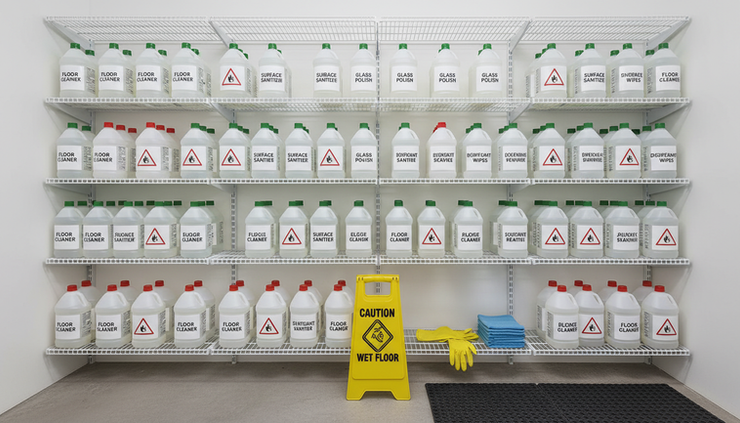
Cleaning chemicals and storage
Machinery checks
Lone working procedures
Staff induction and training
The aim is not to create a thick folder. The aim is to make sure everyone knows the safe way to work.

You may still need risk assessments
Risk assessments are closely linked to your policy. They identify hazards and set out controls.
If you have fewer than five employees, you do not usually have to write down your risk assessment. But you still need to assess risks. If something goes wrong, being able to show what you considered and what steps you took can be very useful.
For many small businesses, written risk assessments are worth doing even when not strictly required. They help you avoid relying on memory.
They are especially useful when you have:
Manual handling tasks
Work at height
Vehicles or deliveries
Lone working
Chemicals, dust, fumes, or cleaning products
Hot surfaces, sharp tools, or machinery
Members of the public on your premises
A short written risk assessment can be enough. It should focus on real risks, not unlikely problems.
Why writing it down can protect your business
A written health and safety policy can save time, reduce confusion, and support better decisions.
It can help when:
A new employee starts
A customer or client asks about safety arrangements
An insurer wants evidence of risk management
A landlord, contractor, or supplier asks for safety documents
An incident happens and you need to show what controls were in place
It also creates consistency. If only one person knows how something should be done, the system breaks when that person is away.
For small businesses, the biggest benefit is clarity. A simple policy answers basic questions before they become problems.
Common mistakes small businesses make
Many small businesses try to manage health and safety informally. That can work for very low-risk tasks, but it often leaves gaps.
Common mistakes include:
Using a generic template without checking it
A policy copied from the internet may mention risks that do not apply, while missing the risks that do.
Writing too much
Long documents often get ignored. A short, accurate policy is usually better.
Forgetting to review it
Your policy should change when the business changes. New equipment, new premises, new staff, or new tasks can all affect safety.
Ignoring training
A policy only helps if people understand it. Staff need clear instructions, especially for higher-risk tasks.
Not keeping basic records
Accident records, training notes, equipment checks, and fire checks can all help show that safety is being managed.
What if I am the only person working in my business?
If you work entirely by yourself and do not employ anyone, the rules are slightly different.
If you are self-employed, health and safety law will generally apply where your work activity could create a risk to other people, or where you carry out certain higher-risk activities such as construction, agriculture, work with gas or asbestos.
So, even if you are the only person in the business, you should still consider questions such as:
Could my work harm a customer, contractor, visitor or member of the public?
Am I using equipment, chemicals or substances that could cause harm?
Does my work create risks such as dust, fumes, noise, work at height or manual handling?
Do I work at client premises or in places where other people could be affected?
What controls have I put in place to manage those risks?
HSE makes clear that self-employed people whose work creates a risk to others have a duty to protect both themselves and those who could be affected by their activities.
Even where you are not legally required to produce extensive health and safety documentation, keeping simple records can still be a good business decision.
For example, a basic risk assessment, safe working procedure, training or competency records, equipment checks and relevant certificates can help you demonstrate that you have actually considered the risks and taken sensible precautions.
This can also be particularly useful when working for larger organisations, tendering for contracts or providing information to clients and insurers.
Being a one person business does not automatically mean health and safety does not apply. The important question is whether your work could put you or somebody else at risk.
How A2B Smart Safety Ltd can help
A2B Smart Safety Ltd supports businesses that want health and safety to be clear, practical, and proportionate. That is especially useful for small employers who are unsure what they need and what they can safely keep simple.
Support can include:
Reviewing current health and safety arrangements
Creating a simple written policy
Carrying out or reviewing risk assessments
Helping with fire safety arrangements
Advising on staff training needs
Preparing documents for clients, insurers, or contractors
Helping businesses stay ready as they grow
The goal is to give you documents and advice that match the way your business actually works. No unnecessary complexity. No paperwork that sits unread.
A sensible answer for small businesses
If you have fewer than five employees, you may not legally need a written health and safety policy. But you still need to manage health and safety properly.
Even where you are not required to have a written policy, it is worth asking yourself: if a client, insurer, employee or regulator asked how you manage health and safety, how would you demonstrate the controls you have in place and show that safety has been properly considered?
That is why documenting your arrangements is a sensible move, even when it is not strictly required. Having something in writing gives you a clear way to demonstrate what controls are in place, how responsibilities are managed and that health and safety has been actively considered rather than left to chance.
For many small businesses, the best answer is to create a short, practical policy anyway. It helps staff understand what to do, gives clients and insurers confidence, and prepares the business for growth.
Health and safety does not need to be complicated. It needs to be clear, relevant, and used. A2B Smart Safety Ltd can help you get that balance right.
Frequently asked questions
Do I need a health and safety policy if I have fewer than five employees?
Yes, you still need arrangements for managing health and safety, but if you employ fewer than five people, you do not usually have to put your health and safety policy in writing.
However, documenting it is still a sensible move. It gives you a clear way to demonstrate how health and safety is managed and what controls you have put in place.
Do part time employees count towards the five employee limit?
Yes. The rule relates to the number of employees, not whether they work full-time or part-time. If you employ five people in total, the requirement to have a written health and safety policy applies.
Do I still need risk assessments if I have fewer than five employees?
Yes. Having fewer than five employees does not remove the requirement to assess and manage risks.
The main difference is that businesses with fewer than five employees are not generally required to record the significant findings of their risk assessments. Even so, keeping written risk assessments can be a very useful way of showing what hazards you identified, what controls you have introduced and what further action may be needed.
Why should I write things down if the law does not require me to?
Ask yourself a simple question: if someone asked you tomorrow how you manage health and safety in your business, what could you show them?
Written policies, risk assessments, training records, inspection records and other simple documentation can help demonstrate that risks have been considered and controls are being managed.
Documentation should support what you actually do in practice - not replace it.
What happens when I employ my fifth employee?
Once you reach five employees, your health and safety policy must be written down. You will also need to record the significant findings of your risk assessments.
If your business is growing, putting simple arrangements in place before you reach that point can make the transition much easier.
Does a small business health and safety policy need to be complicated?
No. A good policy should be proportionate to your business.
A small, low-risk business may only need a relatively straightforward document explaining its commitment to health and safety, who is responsible for what, and how the main risks are managed.
A short policy that reflects what actually happens in your business is far more useful than a long generic document that nobody reads.
Can I use a free health and safety policy template?
A template can be a useful starting point, but it should be adapted to your business.
Your policy should reflect your actual activities, responsibilities and arrangements. Copying a generic policy that mentions controls you do not have - or misses significant risks that you do have - can give a misleading picture of how health and safety is managed.
How often should I review my health and safety policy?
There is no benefit in creating a policy and then forgetting about it. Review it when there are significant changes to your business and periodically to make sure it still reflects what you actually do.
Changes might include new premises, equipment, employees, processes or working practices.
Do I need a health and safety consultant for a small business?
Not necessarily. Some small businesses can manage straightforward risks themselves if they have the necessary knowledge and experience.
However, if you are unsure what applies to your business, have higher-risk activities, are growing, or simply want reassurance that the right arrangements are in place, getting competent health and safety support can save time and help you focus on the areas that actually matter.
Every employer must have access to competent health and safety assistance to help them meet their legal duties. That competent person could be you, one of your employees, or an external health and safety professional.



Comments